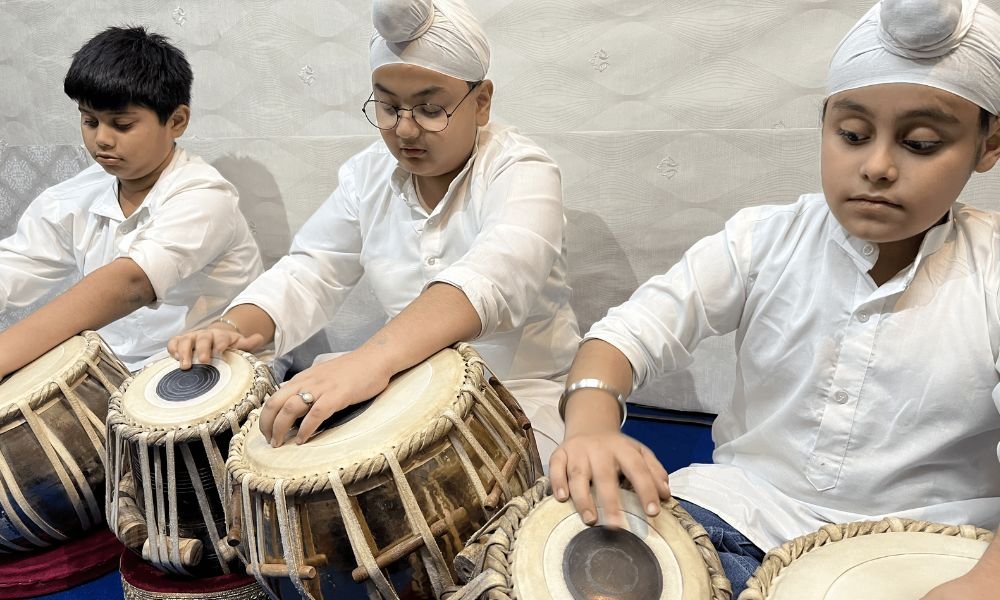
Tabla is one of the most popular percussion instruments in Indian classical music. Known for its rich tones and rhythmic patterns, it plays an important role in classical performances, devotional music and many other musical traditions. For beginners, learning tabla is an opportunity to understand rhythm, develop coordination and explore the beauty of Indian music.
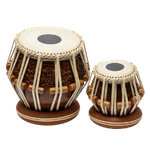
Tabla is a pair of hand-played drums. The smaller drum is called the Dayan, usually played with the dominant hand, while the larger drum is called the Bayan, which produces deeper bass tones.
Together, these drums create a wide range of sounds that can express simple rhythms as well as complex musical patterns.
In tabla, individual strokes are represented by spoken syllables called bols. These syllables help students understand, remember and practise different rhythmic patterns.
Some common tabla bols include:
The sound and technique of each bol depend on the particular stroke and the tabla tradition being taught. Beginners usually learn these sounds slowly before combining them into rhythmic patterns.
Taal is the rhythmic cycle that provides structure to a musical performance. Each taal has a specific number of beats, known as matras, arranged into sections.
Beginners commonly learn the following taals:
Understanding these cycles helps students maintain rhythm and accompany vocalists or instrumentalists with greater confidence.
Tabla offers more than musical knowledge. Regular practice can help learners develop several useful skills:
Progress depends on consistent practice, appropriate guidance and the individual learner's pace.
Yes. Beginners can start learning tabla without any previous musical training. A step-by-step learning programme introduces the instrument, basic bols, rhythm and simple taals before moving towards more advanced compositions.
Children, teenagers and adults can all begin learning at a suitable level. With regular practice and guidance, students can gradually develop their technique and musical understanding.
At Khalsa Music Academy, students can explore tabla through structured lessons, guided practice and progressive learning. From understanding basic strokes to practising traditional taals and compositions, the learning journey develops one step at a time.
Whether you are discovering Indian classical music for the first time or looking to improve your existing skills, learning tabla can be a rewarding way to connect with India's rich musical heritage.
Ready to begin? Explore the tabla course at Khalsa Music Academy and take your first step towards learning this beautiful instrument.
 Call Us
 Whatsapp