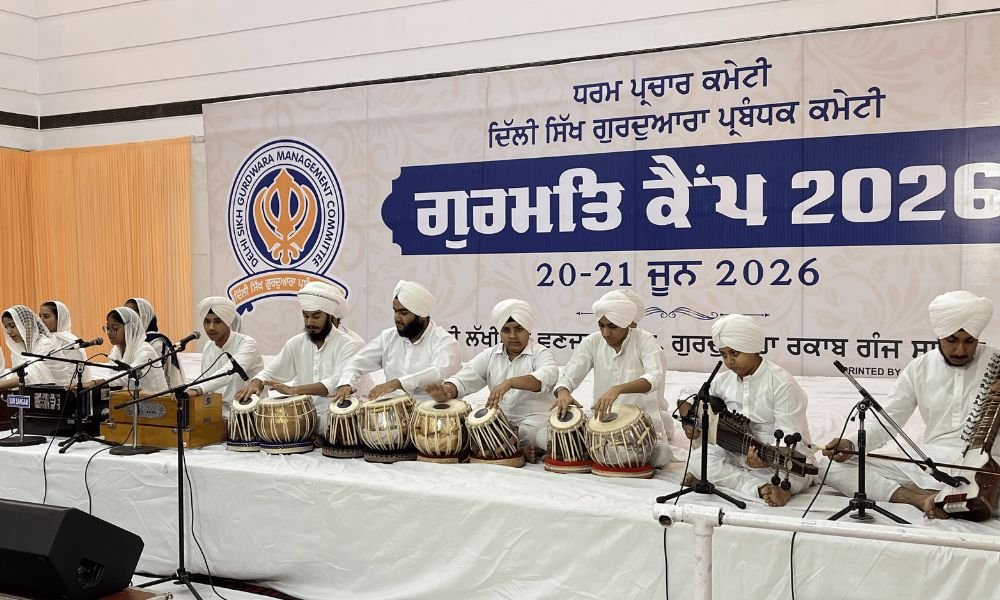
Gurbani Kirtan is a profound spiritual discipline where the sacred verses of divine poetry converge seamlessly with the emotive precision of Indian Classical Raags. In the Sikh tradition, music has never been treated as mere entertainment; it is an elevated medium of contemplation, meditation, and inner stillness. When sacred words (Bani) merge with classical melody (Raag) and disciplined rhythm (Taal), sound ceases to be ordinary and becomes a transformative spiritual experience.
The core of Gurmat Sangeet lies in an intentional marriage of meaning and emotion. In Sri Guru Granth Sahib, compositions are meticulously organized by Raag. This deliberate structure ensures that the underlying psychological emotion of the music serves the message of the Shabad, rather than overpowering it.
A Raag is far more than a musical scale; it is an emotional architecture. Whether it is the quiet, yearning introspection of Raag Bilawal, the deep longing of Raag Gujri, or the profound peace and devotion of Raag Asa, every note evokes an atmosphere that opens the mind to spiritual contemplation. The melody acts as a vessel that gently carries the listener into the essence of the Shabad.
By aligning Kirtan with these natural shifts, practitioners and listeners experience a deep harmony with the surrounding universe, grounding the spirit in balance and awareness.
The traditional expression of Gurmat Sangeet is intimately tied to classical stringed and percussion instruments (Tanti Saaj). Instruments such as the Rabab, which accompanied Guru Nanak Dev Ji through Bhai Mardana, along with the Taus, Dilruba, Santoor, Harmonium, and Tabla, produce acoustic tones that enhance the vocalized prayer.
Unlike processed digital sounds, bowed and plucked string instruments reflect the microtones (Shrutis), glides (Meend), and delicate vocal inflections characteristic of Raag training. Accompanied by the measured, anchoring beats of the Tabla, the music creates an immersive sanctuary of sound.
To sing or play Gurbani in Raag requires both technical humility and devotional surrender. A student begins with the basics: identifying Swaras, mastering Sargam, understanding Aroha and Avaroha, and locking in the Laya of Teentaal, Ektaal, or Kehrwa. Yet, the true art emerges when technique recedes into the background, leaving only pure expression and devotion.
In Gurmat Sangeet, practice (Riyaz) is considered a form of Seva (selfless service). Every hour spent perfecting a note or holding a rhythm disciplines the ego, transforming the practitioner into an instrument of grace.
Immersing oneself in Gurbani Kirtan through the rich heritage of Indian Classical music is an enriching journey that bridges history, discipline, and soul. Whether listening attentively in a congregation or learning the foundational notes in a classroom, the union of Bani and Raag continues to awaken the spirit, quiet the mind, and celebrate the enduring beauty of traditional sound.
 Call Us
 Whatsapp